Teaninich Distillery was founded in 1817 in Alness in the Northern Highlands as a legal distillery, which had become common in Scotland a few years prior. Captain Hugh Monro, owner of the Teaninich estate, built it on his own land. Hugh Monro, and later his brother John, would operate the distillery until 1850 when it was leased to Robert Pattison of Leith. A notorious figure in whisky history, Pattison would go on to lend his name to the Pattison Crash at the end of the century, which brought down many distilleries.
Teaninich was not one of them. It remained open and passed through a few more sets of hands before being sold to Scottish Malt Distillers, a subsidiary of Distillers Company Limited, in 1933. DCL would later become part of Diageo and bring Teaninich along with it.
Like many distilleries, Teninich shut down during World War II due to barley shortages. The distillery closed its doors in 1939 and didn’t reopen until 1946. Two of its stills were removed during this period. When it did reopen after the war, Teannich would repeatedly be expanded in scope and modernity. In 1962, the stillhouse was completely electrified, ending its reliance on steam and water power.
The current distillery building was first constructed in 1970 with six new stills and was known as side A. The new and old worked in tandem for more than a decade until the market slumped. The old building, side B, was mothballed in 1984 and the new distillery followed suit the next year. It would reopen in 1991 once things picked up, but the old buildings never came back online. They were finally demolished in 1999.
The most recent expansion came in 2015 when Teaninich opened a completely new stillhouse containing six new stills. This worked alongside the old one rather than replacing it and doubled the distillery’s capacity.
Teaninich’s most outstanding piece of equipment is its mash mill and filter, which replaces a mash tun. A hammer mill grinds the malted barley into a powder, which is then mixed with water in a conversion vessel. Once mixed, the starch turns to sugar and then passes through the mash filter. The end result of this process is a very clear wort, which provides the foundation for a grassy spirit. Teaninich is one of only two distilleries in Scotland to use this method rather than a mash tun.
In addition to the mill and filter, the distillery is also equipped with 20 backwashes, 18 of which are wooden and two of which are stainless steel. The 12 stills are split between two different stillhouses, with all the spirit stills in one and the wash stills in the other. All of this gives the distillery an annual output of 10.2 million liters.
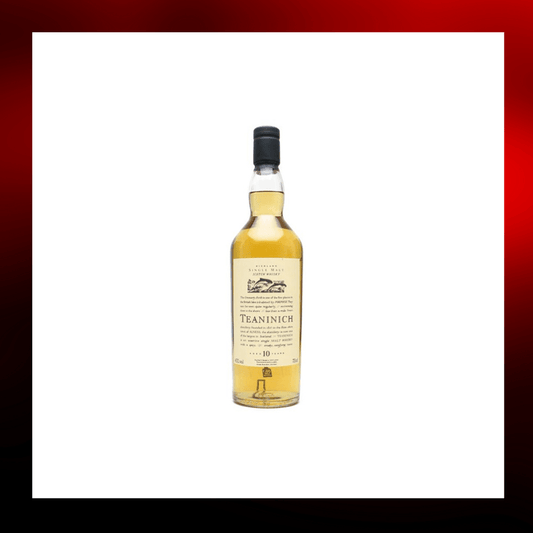
Teaninich has only one widely available distillery bottling, the 10-year-old Flora & Fauna. It’s light and grassy on the nose but finishes with notes of citrus and spice.
The palate is dry and slightly oily with notes of malt and spice and a touch of acidity and a long, dry finish. The only other distillery bottling was a 17-year-old that was released in 2017 in the special release series. Independent bottlings are also common.