Lesson 2: The Whisky-Making Process
Share
Lesson 2: The Whisky Making Process
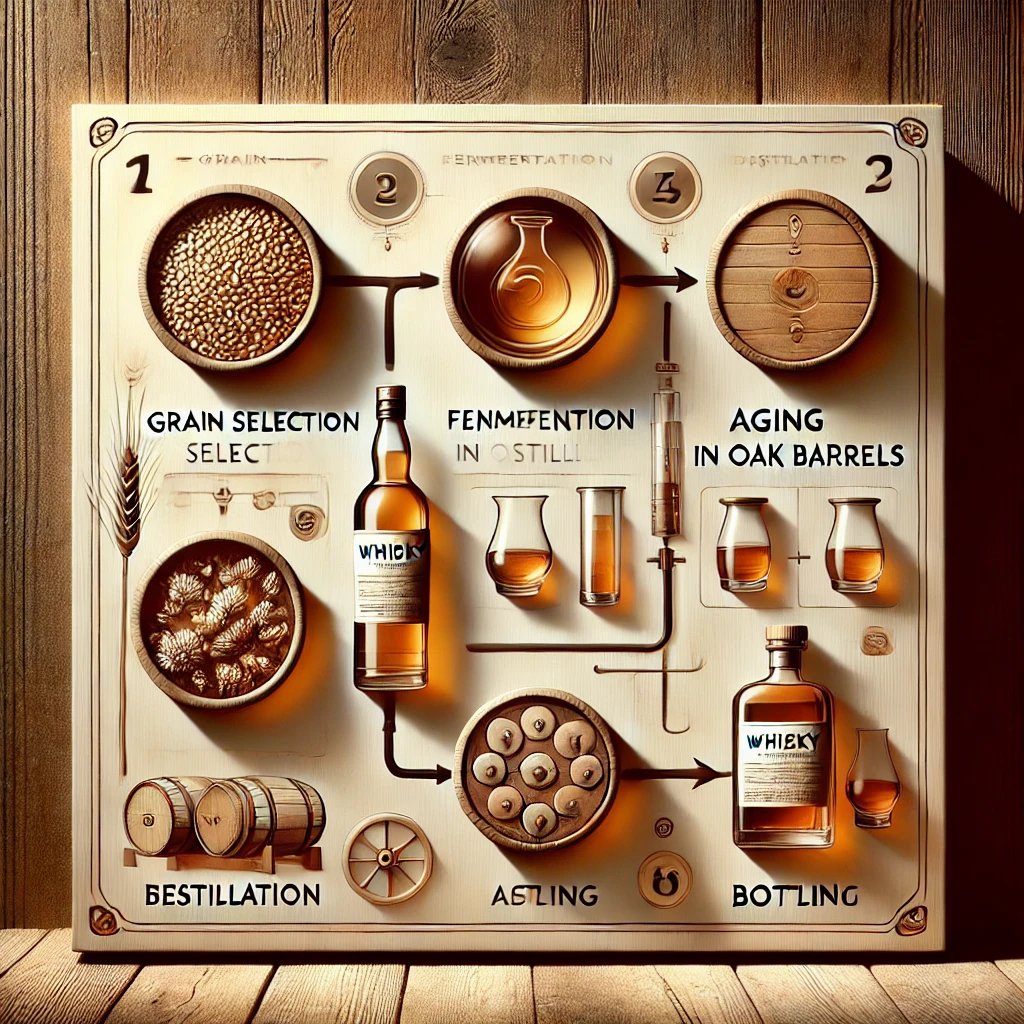
Whisky making is a refined and artistic process, involving several key steps. Understanding these steps will help you better appreciate the flavor of every sip of whisky.
1. Selection and Treatment of Raw Materials:
The main raw materials for whisky are grains, commonly including barley, corn, rye, and wheat. Different grains will bring different flavors. Taking barley as an example, when making single malt whisky, sprouted barley (i.e., malt) is used. This process releases natural enzymes that help convert starch into sugar, preparing for subsequent fermentation.
2. Fermentation:
Fermentation is the process of converting sugar into alcohol. Crushed grains are mixed in warm water to fully dissolve the sugar. Afterwards, yeast is added, and fermentation begins. This process usually lasts 48 to 72 hours, producing a liquid called "wash" or "fermented liquid," with an alcohol content of approximately 8% to 10%.
3. Distillation:
The fermented liquid is placed in a still for distillation. Whisky is usually distilled twice (though Irish whiskey is typically distilled three times). During distillation, alcohol evaporates and is then cooled, turning back into liquid and concentrating, thereby increasing its alcohol content. This process produces a liquid called "new make spirit" or "distillate."
4. Maturation:
The distilled new make spirit needs to be matured in oak casks. This process usually lasts for at least three years, but many high-end whiskies are matured for much longer. Oak casks impart color, aroma, and flavor to the whisky. During maturation, the whisky absorbs natural substances from the cask and undergoes subtle reactions with oxygen in the air, which makes the whisky's flavor more complex.
5. Bottling:
After maturation, the whisky is diluted to an appropriate alcohol strength (usually 40% to 46%), then filtered and bottled. Some whiskies may be blended before bottling to achieve the ideal flavor balance.
🥃 Lesson 2: The Whisky Making Process 🏭
Whisky making is an artistic process, with every step from raw material selection to final bottling meticulously executed. From choosing the right grains to fermentation, distillation, and the long maturation in oak casks, all these factors influence the final whisky's flavor and quality. Learning about these production processes will not only enhance your appreciation for whisky but also infuse every sip with a sense of its story. Next time you raise a glass, remember this magical journey of creation! 🍂
At Drunken Whisky, we understand how much effort goes into every drop of whisky. That's why we carefully select high-quality whiskies from around the world, allowing you to experience the wonder of craftsmanship and time in every tasting. Visit our website www.drunkenwhisky.com to explore more about whisky making and choose your favorite bottle!
Whisky making is a refined and artistic process, involving several key steps. Understanding these steps will help you better appreciate the flavor of every sip of whisky.
1. Selection and Treatment of Raw Materials:
The main raw materials for whisky are grains, commonly including barley, corn, rye, and wheat. Different grains will bring different flavors. Taking barley as an example, when making single malt whisky, sprouted barley (i.e., malt) is used. This process releases natural enzymes that help convert starch into sugar, preparing for subsequent fermentation.
2. Fermentation:
Fermentation is the process of converting sugar into alcohol. Crushed grains are mixed in warm water to fully dissolve the sugar. Afterwards, yeast is added, and fermentation begins. This process usually lasts 48 to 72 hours, producing a liquid called "wash" or "fermented liquid," with an alcohol content of approximately 8% to 10%.
3. Distillation:
The fermented liquid is placed in a still for distillation. Whisky is usually distilled twice (though Irish whiskey is typically distilled three times). During distillation, alcohol evaporates and is then cooled, turning back into liquid and concentrating, thereby increasing its alcohol content. This process produces a liquid called "new make spirit" or "distillate."
4. Maturation:
The distilled new make spirit needs to be matured in oak casks. This process usually lasts for at least three years, but many high-end whiskies are matured for much longer. Oak casks impart color, aroma, and flavor to the whisky. During maturation, the whisky absorbs natural substances from the cask and undergoes subtle reactions with oxygen in the air, which makes the whisky's flavor more complex.
5. Bottling:
After maturation, the whisky is diluted to an appropriate alcohol strength (usually 40% to 46%), then filtered and bottled. Some whiskies may be blended before bottling to achieve the ideal flavor balance.
🥃 Lesson 2: The Whisky Making Process 🏭
Whisky making is an artistic process, with every step from raw material selection to final bottling meticulously executed. From choosing the right grains to fermentation, distillation, and the long maturation in oak casks, all these factors influence the final whisky's flavor and quality. Learning about these production processes will not only enhance your appreciation for whisky but also infuse every sip with a sense of its story. Next time you raise a glass, remember this magical journey of creation! 🍂
At Drunken Whisky, we understand how much effort goes into every drop of whisky. That's why we carefully select high-quality whiskies from around the world, allowing you to experience the wonder of craftsmanship and time in every tasting. Visit our website www.drunkenwhisky.com to explore more about whisky making and choose your favorite bottle!